
Garden & avenue classics
Claret Ash
Fraxinus angustifolia 'Raywood'
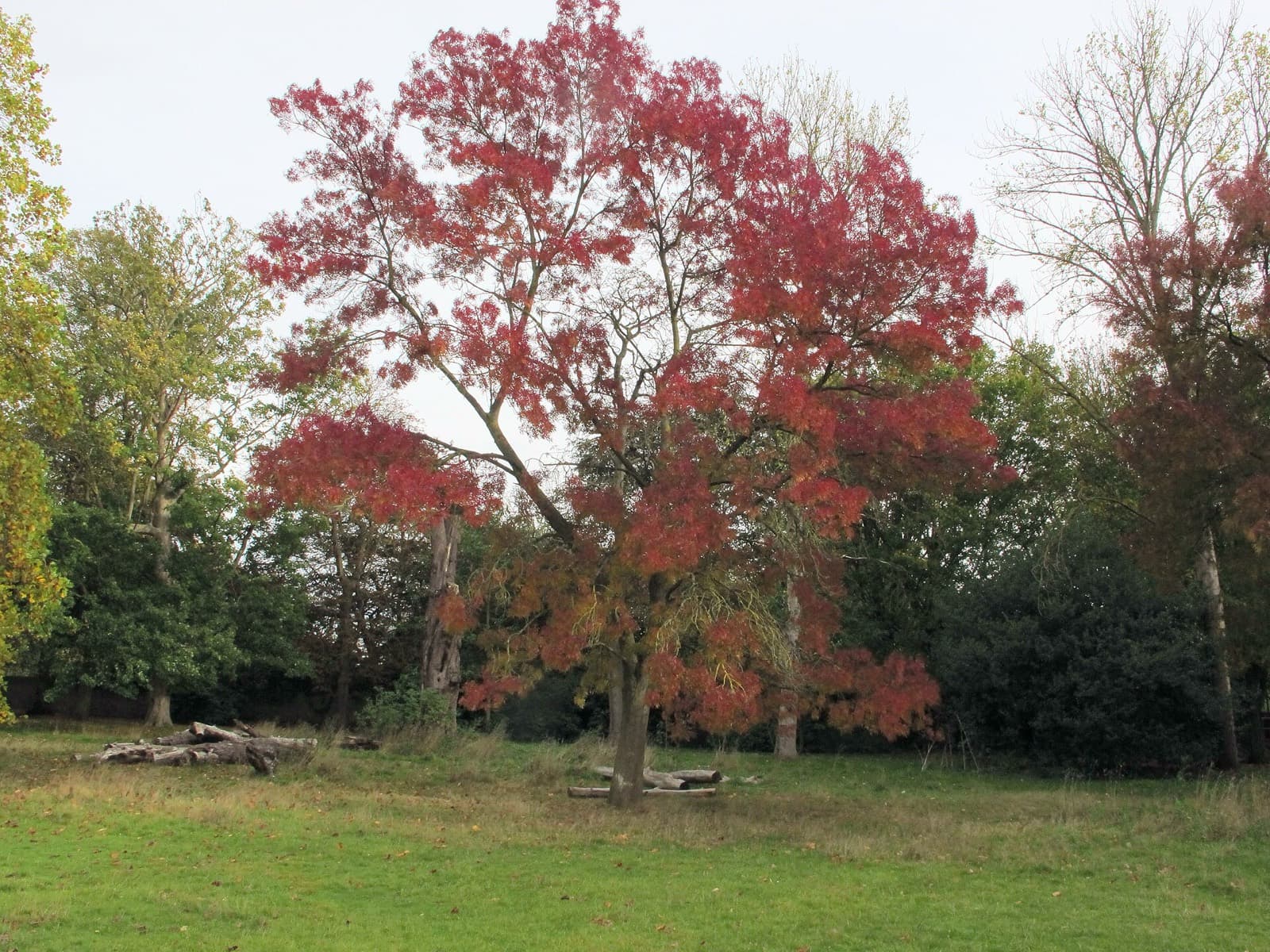
When a whole street in Camberwell or Malvern turns wine-red in April, you're looking at claret ash. It's an Australian story: the cultivar was discovered near Adelaide around 1910 at a property called Raywood, and from there it spread to streets and gardens around the world.

How to spot a claret ash
Leaves
Fine, narrow leaflets arranged in feathery sets along a central stalk, giving the whole crown a soft, ferny texture.
Autumn colour
The signature. Deep claret to burgundy, reliably every year, often holding a week or two before dropping all at once.
Bark
Pale grey and smooth when young, developing shallow furrows with age.
Form
A rounded, upright crown to 15 or 20 metres, reached quickly. Claret ash is one of the faster growers on Melbourne streets.
Winter
Bare and fine-twigged, with dark buds. The fast growth shows in long, straight annual shoots.
Where you'll see it around the south east
Post-war streets and gardens across Camberwell, Canterbury, Malvern and the wider east, where it was planted in numbers for its speed and colour. Often the tallest thing in a 1950s or 60s garden.
Claret ashes colour the post-war streets of Camberwell, Malvern and Canterbury, and Jordan prunes them to AS 4373.
What to watch for
Owners often notice several tall stems rising from one tight fork, long whippy annual shoots at the top of the crown, and the whole tree dropping its claret leaves within a week in late April. If something looks different from last year, a tree health assessment will tell you what the tree is showing. For the signs people notice first, see common tree problems.
Worth knowing
Like many fast-growing trees, claret ash can form tight, narrow branch unions with bark trapped inside the fork, which is one reason formative pruning while a tree is young is time well spent. It's also a factual point of identification: mature claret ashes often show several near-vertical stems rising from one point.
Easily confused with
Desert ash has similar foliage but turns yellow, not red, and golden ash has yellow twigs and butter-coloured autumn leaves. Nothing else on a Melbourne street does true claret.
Think this is your tree? Or still not sure?
Either way, a couple of photos in the quote form is all Jordan needs to identify it. Every tree is different, so what yours needs is always assessed in person, never from a guide.
Your trees deserve expert care.
Tell Jordan what you need.
Fill out the form below and Jordan will get back to you with a detailed quote. No obligation, no pressure.